
Tribute to Sr Stan Kennedy
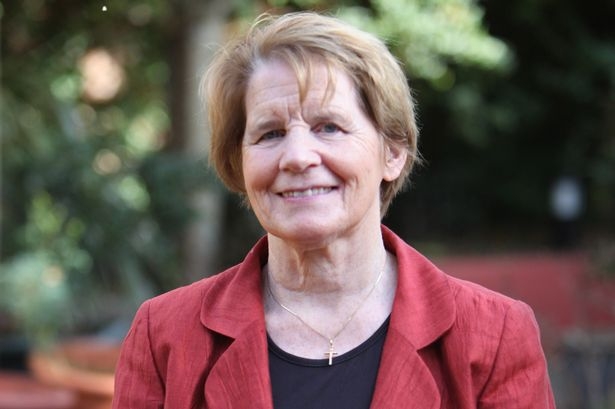
Sr Stanislaus Kennedy: A Life Lived at the Frontlines of Poverty and Homelessness
Early in November, Sr. Stanislaus Kennedy, a Sister of Charity in Ireland passed away.
Over the years she had been at the coal face of the fight against poverty and homelessness and an ardent defender of the people and families left on the side of the road. Early on she discovered:
“Services weren’t enough. You had to have advocacy as well. That’s what drove me” (Irish Times obituary, 8 November 2025)
Early Work and Vision in Kilkenny
Having grown up in a rural community in the west of Ireland, Sr Stan heard from a friend that the Irish Sisters of Charity worked with the poor and the homeless. She joined them and while still a novice in the 1950s discovered impoverished in families living in poorly constructed housing in Dublin docklands. In the 1960s, Sr Stan began her work in Kilkenny alongside Bishop Peter Birch who had initiated a pioneering community services programme. From the beginning, she insisted on supporting whole families rather than addressing individuals in isolation. This was an approach that would shape her lifelong struggle for justice.
She believed, as did Peter Birch, that the Catholic Church needed to “identify more with the poor”. Obituary, Irish Times, 8 November 2025.
Such conviction grounded her involvement in national and European anti-poverty initiatives and placed her at the heart of emerging efforts to challenge structural poverty across the continent.
Connecting with Europe and ATD Fourth World
Sr. Stan was later appointed by the Irish government as chair of an EU-funded Irish Committee on Pilot Schemes to Combat Poverty. This was the era of the EU’s first anti-poverty projects, in which ATD Fourth World was deeply engaged across France, the Netherlands, Belgium, and the UK, where Mary Rabagliati, one of the founders of ATD’s international Volunteer Corps, was at the forefront such an effort.
During this time, valuable exchanges developed between Sr Stan, Joseph Wresinski, and Alwine de Vos van Steenwijk. She visited the ATD International Centre in Méry-sur-Oise, joining other European practitioners seeking deeper understanding and new methods to combat poverty.
A sign of the trust and shared commitment that emerged was the sending of an Irish volunteer, Philomena Byrne, a young woman who had been closely involved with St Stan and Bishop Birch. Philomena joined the UK team at the Frimhurst Family Centre, bringing her energy, creativity, and relentless work ethic. She later joined the ATD Volunteer Corps and then the International Centre for several years.
Focus Ireland and National Leadership
After Bishop Birch’s death, Sr Stan moved to Dublin, where she turned her attention even more sharply on homelessness, creating Focus Point, later Focus Ireland, now one of the country’s most respected national organisations providing housing and support for people without a home.
She developed programmes for overcoming poverty in rural Ireland, setting up rural co-operatives and also projects for the Traveller Community, who are still very excluded in Ireland. In 1985, the European Commission appointed her coordinator of the EU’s rural poverty programmes, further cementing her position as a strong European voice for social inclusion.
Community, Inclusion, and the Need for Nourishment
When we arrived in Ireland in 2000, we wrote to her and arranged a visit. She welcomed us warmly and we were immediately struck by the depth of her respect for Joseph Wresinski and Madame de Vos and for the ATD Fourth World approach.
In our conversation she highlighted the call for combating poverty by building communities:
“I have one message, ‘inclusiveness’, in every sense of the word. We all live our live… but how can we build bridges from community to community, from individual to individual? The aim of our organisation is not so much to build houses but communities, where there is a mix of people”.
She also stressed the need for people engaged in social justice work to resource themselves so as to sustain their commitment.
“I have seen many good people, very dedicated people, getting burnt out because of lack of space and time to resource themselves. It is a lack of nourishment, but also a lack of a clear vision, a lack of a clear set of values, a lack of a mission”. In response, she created “The Sanctuary”, a reflective space for those engaged in struggles for social justice.
Sr Stan was acutely aware of the contradictions of Ireland’s so-called “Celtic Tiger.” She worried about the intolerance and social fragmentation that accompanied new prosperity, and she consistently challenged Irish society to ensure that “everyone” had a place. She confronted civic and church leaders alike, urging them to solidarity in times of plenty.
Our later contact with her was limited, but we stayed close to the housing initiatives she founded and to families who passed through them. At the core of her work remained a profound respect for human dignity and the integrity of family life.
Continued Innovation and Advocacy
Her creativity never waned. She founded the Immigrant Council of Ireland to defend the rights and inclusion of migrants, and later launched Social Innovation Ireland to encourage young people to devise bold, new responses to social injustice. Young activists were invited to present their ideas at a national forum and were recognised for their contributions.
A Legacy of Courage, Imagination, and Solidarity
Sr Stan leaves an indelible mark on Irish society. She was widely respected for her forward-looking vision, her courage, and her unwavering commitment to those left behind. She reminded Ireland of its responsibility to deepen solidarity and never shied away from challenging national institutions, including her own Church, when justice demanded it. She was never afraid to rock the boat.
Her life stands as a powerful reminder that real change becomes possible when compassion meets courage, and when communities choose to stand alongside those whose voices are least heard.
By Stuart and Isabelle Williams
